STEP 1: Sing

Unto thee, O my strength, will I sing: for God is my defence, and the God of my mercy. 

Psalm 59:17 (KJV)

Not every plan we implement this year will bring the success we crave. The first step to a successful year is to realize a one-size-fits-all plan is not the answer. Just as our dreams and journeys are personal, our plans should be designed for us, too.

Another reason our strategy should be personalized is that complicated plans are abandoned, while easy plans often leave out crucial elements for the sake of reaching the goal. Discovering the perfect steps to help us obtain our objectives may take a while. Still, we shouldn’t give up. Meanwhile, we succeed anytime we obey the Word of God. Guaranteed.

5 STEPS for Success in 2025 is a simple way to reach daily goals. I want to share Step 1 today.

Sing for Spiritual Renewal

Sing unto the LORD, O ye saints of his, and give thanks at the remembrance of his holiness.

Psalm 30:4 (KJV)

If remembering God’s holiness is the only reason we sing, then let us sing for that reason alone. Of course, there are other reasons for an aria.

Something happens when we sing.

If you think the commandment to sing is for God’s benefit alone, you’re mistaken. A physical, mental, and spiritual shift occurs when we lift our voices in song. For instance, our physical bodies are changed. We move beyond the pain and heartache. We break spiritual chains and win wars. We walk in victory.

When Paul and Silas were in Philippi, they were beaten with many stripes and thrown in prison. But they didn’t quit.

And at midnight Paul and Silas prayed, and sang praises unto God: and the prisoners heard them. And suddenly there was a great earthquake, so that the foundations of the prison were shaken: and immediately all the doors were opened, and every one’s bands were loosed.

Acts 16:25-26 (KJV)

Another example is Jehoshaphat, king of Judah. When he faced three armies, he cried unto the Lord for a plan. The Lord answered his prayer.

Ye shall not need to fight in this battle: set yourselves, stand ye still, and see the salvation of the LORD with you, O Judah and Jerusalem: fear not, nor be dismayed; to morrow go out against them: for the LORD will be with you. 

2 Chronicles 20:17 (KJV)

Jehoshaphat appointed singers to go before the army. (How would you feel about that plan? 😊)

And when they began to sing and to praise, the LORD set ambushments against the children of Ammon, Moab, and mount Seir, which were come against Judah; and they were smitten.

2 Chronicles 20:22 (KJV)

Sing for Physical Renewal

Did you know that something happens in, and to, your body when you sing?

For instance, the left side of the brain is responsible for speech. With it, we construct sentences. However, the right side is responsible for creativity, which involves rhythm and melody. When we sing, both sides of our brains light up! That’s why people who stutter can sing their words without any difficulty.

Singing also strengthens the lungs. A great exercise is to sing or hum while walking or running. And that’s not all! Belting out our favorite tune improves memory because we focus on several things, like music, rhythm, and words.  

Singing can also reduce anxiety and stress, thereby reducing cortisol. Can anyone say belly fat?

Another reason to sing is that singing releases endorphins. Endorphins are the body’s painkillers.  

Serotonin improves sleep, boosts moods, and helps control appetites.

Dopamine helps a person feel pleasure and motivation. It plays a key role in learning, memory, mood, and sleep.

Oxytocin is released in different ways. A few are laughter, exercise, music, and ultraviolet light. A reason we need to spend time in the sun. It relieves stress and anxiety, builds trust, and affects our moods.

As you can see, there are many different reasons to sing. So grab your favorite playlists, radio, or CD, and sing your favorite song while walking in the sunshine!

Your Turn

Share your favorite worship songs and hymns in the comments. Have a wonderful week!

Articles to Read

Endorphins: The brain’s natural pain reliever – Harvard Health Publishing

The Science Behind Singing: What Happens When We Sing? – London Singing Institute

The World’s Most Accessible Stress Reliever – bbc.com

What to Know About Oxytocin Hormone – WebMD

Prodigal

For God so loved the world, that he gave his only begotten Son, that whosoever believeth in him should not perish, but have everlasting life. John 3:16 (KJV) 

Every year, we pull scriptures to piece together the perfect Christmas program. What we don’t include is Christ’s genealogy. Sadly, people admit they skip those hard-to-pronounce names in devotional time. What they don’t realize is there are astounding stories behind those names!

Hang with me here. I know it’s the busiest part of the year. But I want to share a story within Christ’s story. A tale of horror, rebellion, and captivity. It’s also a story of love, mercy, and forgiveness.

You can read the story later in 2 Kings 20:21, 21:1-18, 2 Chronicles 33:1-20, Jeremiah 15:14.

Child King

The Bible tells us that Manasseh was twelve years old when he became king and reigned for fifty-five years. His parents were Hezekiah and Hephzibah. Hezekiah did what was right in the sight of God. He removed the wickedness his daddy Ahaz committed in the land and brought back the worship of YHWH.

Manasseh, on the other hand, followed in his grandaddy’s footsteps and did evil in the Lord’s sight by delving into the occult, human sacrifices, and idolatry. Idol worship often included temple prostitution. In his commentary, Adam Clark writes that Ahaz (grandaddy), Manasseh (grandson), and Amon (great-grandson) did their best to destroy every copy of the written law.

Transgressor

Below is a list of Manasseh’s transgressions according to 2 Kings 21:1-18.

Rebuilt the high places of idolatry Hezekiah destroyed.
Built pagan altars in the temple of God.
Built altars in two courts of the house of God for the hosts of heaven
Worshiped Baal and the hosts of heaven (sun, moon, and stars)
Sacrificed his own son by fire to Molech in the Valley of Hinnom
Observed times. Practiced divination. Consulted spiritists and mediums.
Carved and set an Asherah (Canaanite fertility goddess) pole in the temple.
Shed innocent blood until he had filled Jerusalem from one end to the other. (Tradition says he had Isaiah sawn into.)

Eighteen verses later, we read, “And Manasseh slept with his fathers, and was buried in the garden of his own house, in the garden of Uzza: and Amon his son reigned in his stead.”

A tragic ending if we stop reading there. But God wasn’t through with this transgressor.

Captive

When we sin, it affects everyone in our lives. If only we had listened. If only we had not . . .

Earlier, the Lord promised David and Solomon he would care and protect Israel if they heeded his words and kept his commandments. Yes, Israel and Judah had been riddled with wicked kings, but the evil had never been as prevalent as in the days of Manasseh. The Bible says, “he (Manasseh) seduced his people to do more evil than the nations God had destroyed before the children of Israel.” God told his prophets that because of what Manasseh, king of Judah, had done and made Judah do, he would forsake them and deliver them to their enemies (Kings 21:10-15).

While Manasseh was busy destroying his kingdom, the world around him watched, waiting for an opportunity to pounce. Remember, the surrounding kingdoms knew God protected his people. Earlier, during Hezekiah’s reign, the Assyrian army besieged the kingdom, but God sent an angel to destroy them. Judah was safe in the arms of God. Right?

But the Lord’s people had abandoned Him for other gods. While they worshiped their idols, the Assyrian king invaded and captured a thirty-five-year-old Manasseh with hooks, bound him in chains, and transported him back to Babylon, where he remained for twelve years.

Prodigal

Rather than spending his reign caring for his people, Manasseh wasted his time, money, and energy killing innocent people, committing perversion in the house of the Lord, and seeking false gods that couldn’t help in time of need.

Thankfully, Kings 21:18 isn’t the end of Manasseh’s story. In his affliction, Manasseh humbled himself and prayed. God heard his prayers and brought him back to Jerusalem and his kingdom. “Then Manasseh knew that the LORD he was God.” 2 Chronicles 33:12-13 (KJV)

Is that a love story, or is that a love story?!

Beloved

Jesus told a story of another boy who squandered his blessings and forsook his upbringing. And when all was lost, came to himself and repented.

I will arise and go to my father, and will say unto him, Father, I have sinned against heaven, and before thee, And am no more worthy to be called thy son: make me as one of thy hired servants. And he arose, and came to his father. But when he was yet a great way off, his father saw him, and had compassion, and ran, and fell on his neck, and kissed him. Luke 15:18-20 (KJV)

My friend, God’s love is no different today. If you think you’ve gone too far, all you have to do is turn around. Change directions and run to the Father. Plead mercy. Ask forgiveness. Invite Jesus into your heart.

He’s waiting.

Thankfulness

Enter into his gates with thanksgiving, and into his courts with praise: be thankful unto him, and bless his name. Psalm 100:4 (KJV)

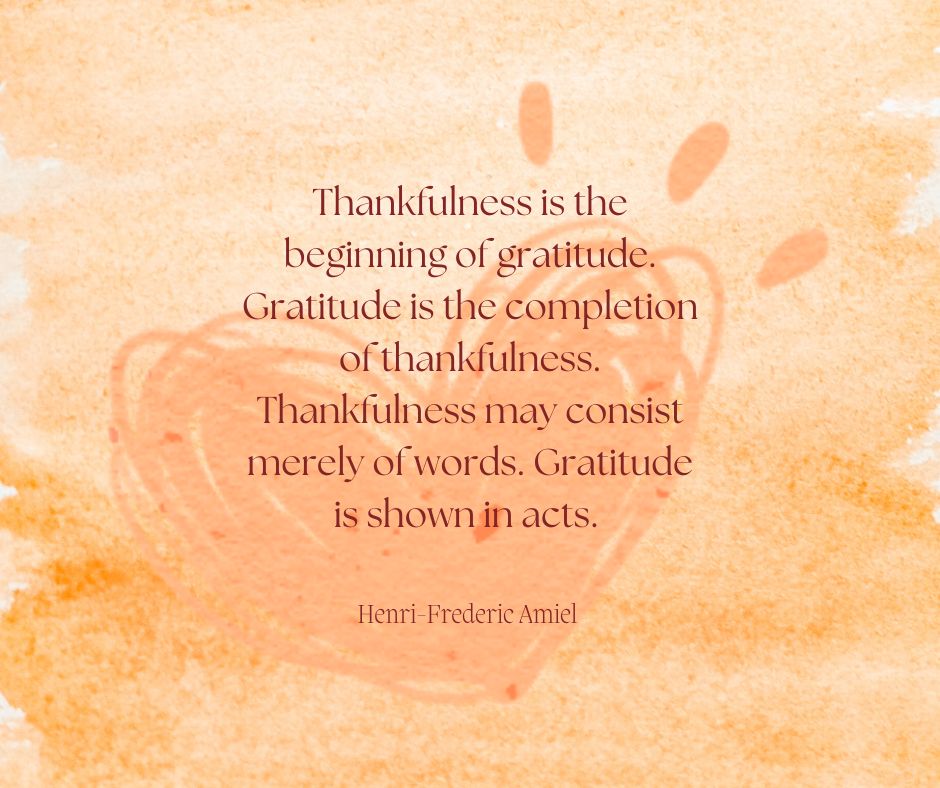
Thankfulness is the beginning of gratitude. Gratitude is the completion of thankfulness. Thankfulness may consist merely of words. Gratitude is shown in acts.

Henri-Frederic Amiel (1821-1881)